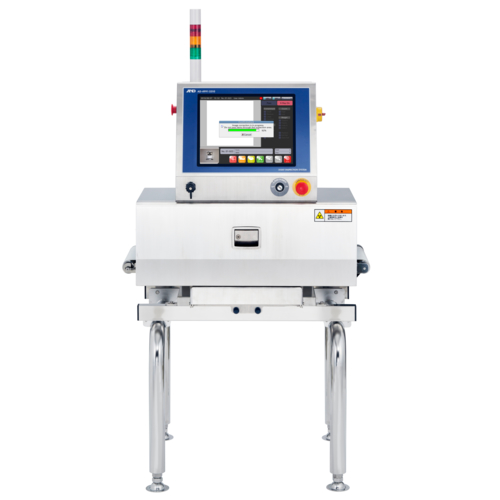
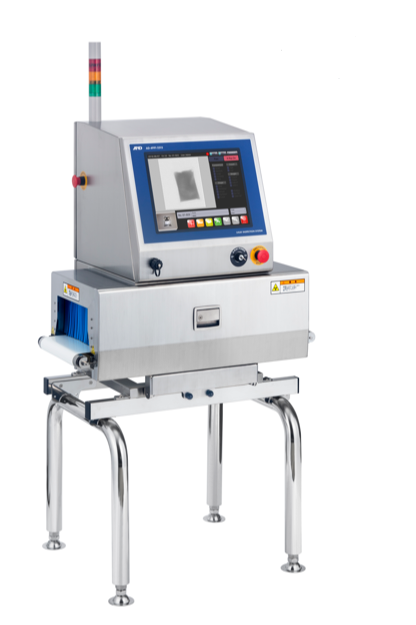
ProteX X-ray series

A&D’s incredible, cutting-edge X-ray technology can help food packaging and pharmaceutical manufacturers improve and manage the quality of their products.

X-ray systems protect brand image and improve reliability, ease of operation, and serviceability. In turn, these improvements allow for future growth and expansion.

At A&D, we are committed to a consultative approach to help you select the technology and configuration that is selected for your application. This is important to ensure a proper HACCP program, which helps prevent contamination.

ProteX is the proud winner of Automation Inside’s 2018 Reader’s Choice Award for Best Identification Technology.

Compare

A&D Advantages

  • Advanced Algorithms: Built for more than just containments, we also provide mass estimation, shape detection, and component verification.
  • Compact Design: Our equipment is the smallest in class to allow for easy in-line integration with minimal reconfiguration of existing equipment.
  • Easy to Read Display: A 15-inch color touchscreen provides users with a vibrant screen for viewing high-resolution imagery.
  • Streamlined Product Setup: Minimal inputs from the user makes setup and changeover quick.
  • Quick-ship Available: For manufacturers who need product inspection systems within a couple weeks.
  • Accelerated ROI: Reject classification allows the operator to see trends in real time and correct issues upstream from the X-ray.
  • Service Simplified: Simple service plans (from a la carte to priority support) to ensure maximum uptime.

X-Ray Detection Capabilities

A&D’s ProteX X-ray system uses advanced technology to detect a wide variety of contaminants and hazards, such as:

  • Metals: Metal, including ferrous, non-ferrous, and stainless steel can be detected via X-ray, even when inside foils and aluminum cans. This is important in almost all manufacturing industries, as components can break at any point during production, and should that happen, the product should be rejected before final packaging.
  • Flavor & Sugar Clumps: Unlike some of the other contaminants, flavor or sugar clumps may not be much of a health hazard, but they do negatively impact the experience consumers have with your product or brand. X-ray detection can find inconsistencies such as these to improve your consumer’s experience when it matters most.
  • Glass: Glass contaminants, including glass shards, can be particularly important to detect when producing products with glass containers, especially in the food and beverage and other consumer packaged goods industries.
  • PVC & TFE Plastics: Due to the use of plastic in a variety of packaging and manufacturing applications, detecting PVC and TFE (Teflon) plastic is very important. From gaskets or plastic handles lost during production, to plastic fragments that may break during packaging of your product, detecting PVC plastics can be an important part of your X-ray processes.
  • Calcified Bone: Calcified bone contaminants are most often found in the meat, fish, and poultry space, but they may also impact industries such as the fresh produce industry.

Beyond Contaminants

Additionally, the ProteX X-ray system provides product inspection functions that cannot be accomplished by metal detection or checkweighing:

  • Missing Product Detection: In scenarios when the total weight of a product is acceptable, X-ray can be used to visually inspect and reject a product if there is missing product inside the package.
  • Shape Detection: X-ray can be used to find inconsistencies in products that should be rejected, like broken or incomplete products.
  • Package Check: In instances where the product shifts during the packaging process, it may be important to check the seal of the product.
  • Masking: Products with clips and oxygen absorbers can be masked to check for presence and avoid a false detection.

Model Comparisons